GET AN EDITOR!!! I can't underline or stress that enough. Some people are able to get by without one. In an interesting post, however, "Seven Deadly Myths and Three Inspired Truths About Book Editing" the author discusses the different types of editors and editor services out there. He points out, too, that many big-name authors get these services during the publishing process, so not necessarily in pre-production like we selfers. I'm always skeptical when anyone claims to have done something entirely on their own. Someone may use Beta Readers, but that is, in some ways, a type of editor. Plus, if they're published by a big house, that company has plenty of people working behind-the-scenes before that book hits the shelves. So...yeah...
It's expensive to work with an editor, but, honestly, this is like any other self-directed career: it takes investment of time and $. Except for the extraordinarily lucky, most of us have to save up the money. It took me a while to save what I needed to work on my novel with my editor, Susan Malone of Malone Editorial Services. When I first worked with her on some short-stories, a sort of test-run for the novel that's in progress, and now published as Three By Moonlight: A collection of werewolf tales, I had to use a big chunk of my tax-return.
I'm not saying she's inordinately expensive, because in comparison to most of the other editors I found, she's not just reasonable, but also generous with her time and mentorship. What I'm really saying is that I'm poor. I've been a struggling singer/retail worker/young person for a while. When I finally had the opportunity to work with her, I jumped at the chance. I didn't buy the new phone I wanted, or the iPad, or take the trip I had hoped for. Susan's been amazing. But she isn't just a copy-editor. She's a developmental editor, and that, especially for my first novel, has been SOOOOO important. She's also helped me in improving my writing immensely. It's been worth every penny I've invested.
The publishing industry is changing, and that change seems to be happening faster and faster as more digital media becomes widely available, and as more people have the ability to create user-generated content. Let's consider, for a moment, that all our writing is user-generated content. Another form of this is video on Youtube. There is an enormous difference between a teenager taking a video on their cellphone, maybe badly lit in their messy bedroom, and the kind of high-production videos put out by major pop-music artists like Lady Gaga, or the best sitcoms. The video quality isn't remotely comparable. The same for other cinematic elements, such as lighting and sound. Whatever the content is, scripted or improvised, is almost never of the same quality as the best produced professional material.
Let's, then, think about the plethora of books now available via Kindle, or other digital formats. I self-published Three By Moonlight, and looking back on the experience, I wonder why so many authors publish via Kindle and not with a hard-copy as well. Well, one reason may be the sometimes difficult process of getting things formatted correctly for CreateSpace. It took me many long hours trying to get the sizes right, to get fonts to turn out correctly, to get spacing and bleed room, and all the other things authors published by a professional company never have to think about. Kindle's formatting is a bit easier, so it takes less time and effort to throw material onto the market via digital publishing.
When I was looking through advice blogs, I ran across one talking specifically about book covers. It had advice and rules to follow. The book cover is the first thing people see, and, honestly, how can we not consider the effort put into a book's cover art as exemplary of the quality of the writing we may find inside. If someone spends so little time on the cover, what's the likelihood that they truly put the time and care into the crafting and editing of the story itself? I have a hard time accepting negligence in crafting cover-art when there is so much royalty-free stock art available online.
In terms of user-generated content, the writing that has grammatical mistakes, sloppy dialogue, spelling errors, editing or formatting issues, or any of the other often blaringly obvious mistakes that a reader immediately picks up on, is the teenager in his or her bedroom with a handy-cam, ranting endlessly about minute trivia of their life that falls somewhere between First-World Problems and inane drivel. If that is the kind of content you're comfortable putting out, go for it. For those interested in being taken seriously by people who take this industry seriously, it is then our responsibility to show we are both serious about what we're doing, and professional enough to fit in among other professionals. That we're not just talented, but that we respect our writing, the craft and our own creative gifts, as well as respect the time of those around us who we might ask to read our work.
Find an editor who will help you improve your writing, challenge you to hammer out details in your story, and not just to slash and burn and start over. Find someone who can take your writing not just to the next level, but to the top level, and make the investment. No one will take you seriously if you don't take yourself seriously. If you don't put out your absolute best, you're not really in the game.
Saturday, June 22, 2013

Advice To Writers, part 1
Writing is hard. It's not just daydreaming about a character, or brief flashes of ideas that someone could turn into a great book...someday. There are probably as many different ways of writing, at least different processes and paths authors take, as there are writers. The final products, however, in many ways share some very central characteristics.
All good fiction begins with characters who are three dimensional. This requires thought, research, and planning. In some ways, all good writers are LARPers. You need to get in the mind of your characters, but if you don't know where they came from, who their first love was, what their home-life was as children, whether they hated their first boss, what their favorite type of food is, then it's harder to formulate interesting reactions to scents, sounds, events, and people in the present of the story. If their thoughts are limited to what takes place in the story, that is, if they don't have sense memory or impressions formed by experiences outside the scope of the book, then they lose depth. Basically, every action has to have a reason, an impulse or driving motive, behind it. You have to ask, "Why is character xxxx doing this? Why now? Why this way? In this place? With this other person? TO this person?"
Perhaps the hardest part about writing is figuring out how much is necessary for the story, how much the readers need to know in order to experience the action of the story first-hand. It's hard not to load things down with backstory, especially if you've gone to all the trouble of making an elaborate backstory, of doing the research, and planning things.
Good writers can take these three dimensional characters and, via the trials and obstacles they face in the course of the story, explore some aspects of the human experience, or of the human condition. The characters face questions, existential crises, and in looking for, and sometimes finding, answers to said questions, we as readers learn something about ourselves, too.
The final product has to engage the reader, pull them in for a first-hand experience, to make them think and feel, and wonder, and hope. When fiction's at its best, whether literary or genre fiction, it accomplishes this. The depth of the characters is essential to this.
All good fiction begins with characters who are three dimensional. This requires thought, research, and planning. In some ways, all good writers are LARPers. You need to get in the mind of your characters, but if you don't know where they came from, who their first love was, what their home-life was as children, whether they hated their first boss, what their favorite type of food is, then it's harder to formulate interesting reactions to scents, sounds, events, and people in the present of the story. If their thoughts are limited to what takes place in the story, that is, if they don't have sense memory or impressions formed by experiences outside the scope of the book, then they lose depth. Basically, every action has to have a reason, an impulse or driving motive, behind it. You have to ask, "Why is character xxxx doing this? Why now? Why this way? In this place? With this other person? TO this person?"
Perhaps the hardest part about writing is figuring out how much is necessary for the story, how much the readers need to know in order to experience the action of the story first-hand. It's hard not to load things down with backstory, especially if you've gone to all the trouble of making an elaborate backstory, of doing the research, and planning things.
Good writers can take these three dimensional characters and, via the trials and obstacles they face in the course of the story, explore some aspects of the human experience, or of the human condition. The characters face questions, existential crises, and in looking for, and sometimes finding, answers to said questions, we as readers learn something about ourselves, too.
The final product has to engage the reader, pull them in for a first-hand experience, to make them think and feel, and wonder, and hope. When fiction's at its best, whether literary or genre fiction, it accomplishes this. The depth of the characters is essential to this.
Saturday, June 15, 2013
 As an adolescent my fascination with werewolves began after seeing Michael J. Fox in “Teen Wolf.” It was the hot, animalistic features that I believe I was drawn to.
My World: A Few Places In The Shadow
Here are a few of the historic buildings from Minneapolis & St. Paul mentioned as being in The Shadow from my stories.
The Lumber Exchange Building

Foshay Tower


The Lumber Exchange Building
Foshay Tower
Rand Tower, the site for the offices of Star Imports
Minneapolis City Hall
Here's the central atrium
Disclaimer: I don't own rights to any of these photographs. I'm using them as Fair Use under the First Amendment.
Currently Reading/Listening To pt. 1
I'm in an MA program for Musicology, so during the school year, and much of this summer, will be devoted to reading academic titles that aren't really relevant here, although they have influenced how I think and, thus, probably how I write. I love audiobooks, though. Here are a few of the books that I have read recently or am reading right now that I think everyone should check out:
Shadow Ops: Fortress Frontier, by Myke Cole


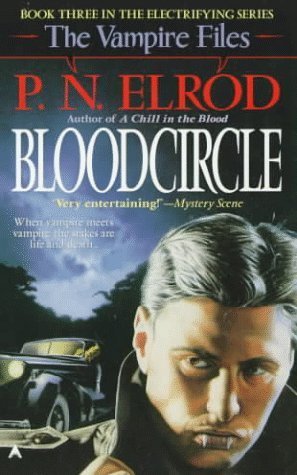
Bloodcircle, by P. N. Elrod
Shadow Ops: Fortress Frontier, by Myke Cole

This is the followup to Shadow Ops: Control Point. I'm super excited about Myke Cole's writing. He writes with a boldness and forthright manner that is refreshing. His take on magic is interesting, and the alternative history setting he creates doesn't go so far as Illona Andrews or Kim Harrison, but is more interesting than most authors trying to create a contemporary setting not radically altered from our reality. That isn't to say I don't thoroughly enjoy Andrews' and Harrison's alternate history, I do. Those author's attempting to integrate magic into something current without having it changing society as a whole, though, often fail to present the conflict in a meaningful way, or to weave said conflict into the internal struggles and emotional journeys of the characters. Myke Cole does this masterfully.
I'm particularly fond of his alternate reality, The Source. Although this makes me think of Charmed and the Source of All Evil, Cole's Source is a strange and dangerous landscape where magic is an integral part of everything. Cole's books are more action driven than drama driven, and thus his Source is written with more physical conflict than the psychological and, in many ways, darker The Black of Caitlin Kittredge's Black London Series. This certainly is representative of these two very different author's backgrounds, Cole being ex-military thus draws on that experience to enrich his narrative of the US government's attempts to regulate and control magic.
I listen to these on audiobooks, which perhaps add to the heart-pounding pace, but overall I would recommend Myke Cole's books to anyone looking for Urban or Paranormal Fantasy that veers more towards action rather than romance.
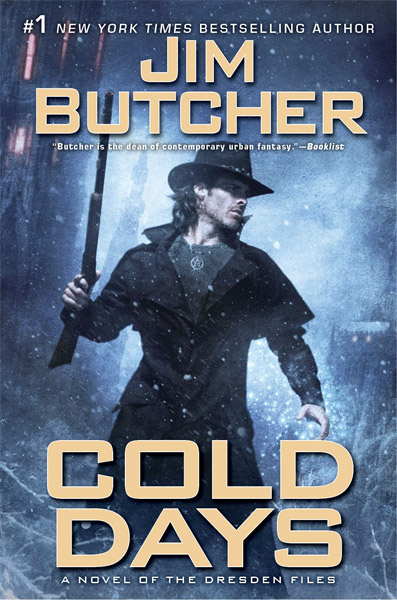
The latest installment of the Dresden Files, Cold Days came out last year and is one of the Harry Dresden books I keep listening too again and again. This book continues to reveal long-term plot-threads Butcher began weaving into the Dresden Files since Storm Front. It is also one of my favorites in the entire series, and, I would say, one of his best. Harry is almost the perfect fallen hero. He's bull-headed, which often overrides his good sense or keeps him from reaching logical conclusions he eventually gets to anyways. This is sometimes frustrating to read, though they are such an endemic part of him as a character that it is hard not to love it anyways. And it's part of why we love him. In this book Harry is the Winter Knight.
The scene with his first encounter with his brother since apparently coming back from the dead is fantastic. In it Harry lays bare his fear of being a monster, something he has struggled with, in one way or another, since the beginning. Here, however, he is what he considers a monster. In his mind he's given in to the seduction of power and traded part of himself for it. Thomas, in typical fashion, chastises him for being an arrogant prig and thinking he's the only one to experience inner demons, and there lies part of Butcher's brilliance.
This series takes me longer to get into, not because the writing is poorer quality, because that is far from the case. This series, however, is not the action driven books of Butcher or Cole, but rather closer to hard-boiled detective novels like The Maltese Falcon. P. N. Elrod does a masterful job at creating the dark and tense atmosphere of the old detective novels, and in grounding the stories in a sense of realism, despite centering on a vampire. I highly recommend them.
My list of most influential books pt. 1
The list of books that have most influenced me over the years, at least of the ones that come to mind, are as follows:
Here is the cover of the book from when I bought it, and then the newest cover:
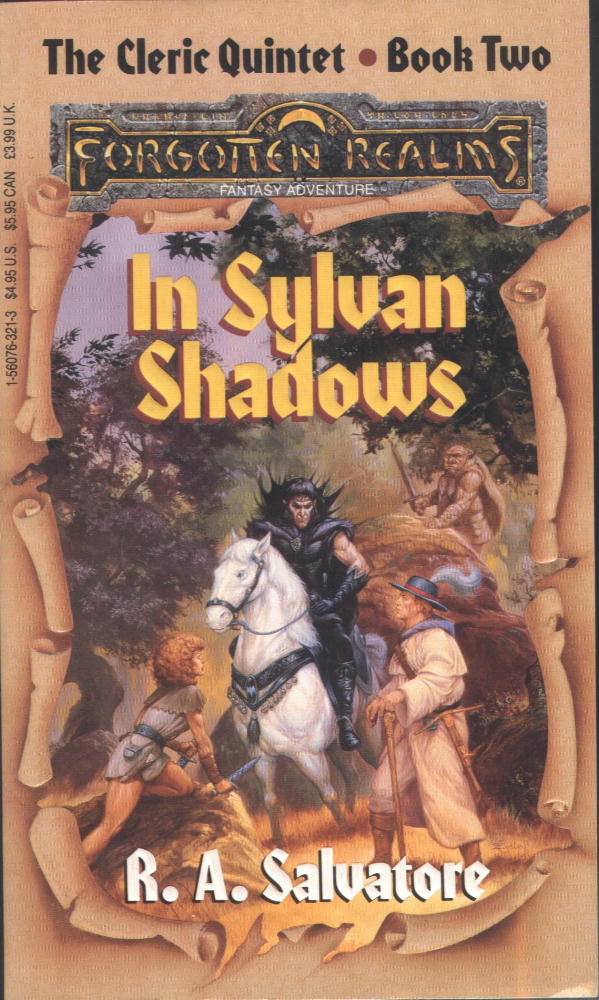
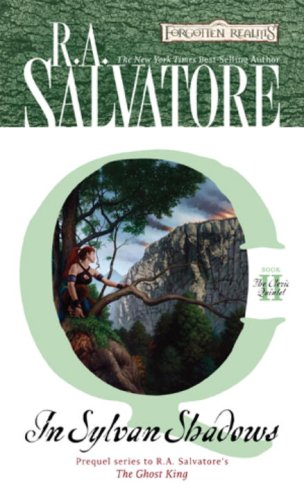


Really, the whole Cleric Quintet influenced me, but overall my favorite authors in the Forgotten Realms were, first, R. A. Salvatore, and then also Ed Greenwood. Salvatore provided characters filled with conflict about being outsiders, misunderstood, and struggling in a world that didn't accept them. Drizzt Do'Urden's stories had an edge to them that many other fantasy novels lack. The stories are full of action, and the knowledge that he, as a drow, would never be accepted anywhere was heartbreaking. There would never be a happy ending for Drizzt, and so he took solace in surrounding himself with a close family of friends and making them his world.
Cadderly, the main character of the Cleric Quintet, was my first fictional character crush. He was lovable, powerful, and searched for meaning in his world. His spirituality, and thus magic, were dependent on music, something I empathize with and which hearkens back to the Silmarillion of J. R. Tolkein. Cadderly's story is ultimately of becoming something far greater than what he started as, and struggling against sometimes overwhelming odds. Here we see Salvatore's more playful side. He is, perhaps, why I fell so deeply for Harry Dresden. There is an element of Dresden in Cadderly, perhaps his often clumsy way of dealing with the world, at least in the beginning. He, too, was abandoned and descended from darker parentage, as well as being destined for far greater things. Dresden is much darker, angrier, and in the end more tragic, but Cadderly shares similar roots.
Greenwood's novels don't have quite the same depth of character as the inherently conflicted protagonists of Salvatore, but his writing is filled with an amusement and playfulness that bely the strong action and driving narrative. We could all aspire to his level of wit and the quality of his prose. AND, lest we forget, the entire Forgotten Realms RPG and fiction setting developed from him and his campaign in Shadowdale with the Knights of Myth Drannor.

This is just an incredible story I read for English in high school. As is:

Subscribe to:
Comments (Atom)