To my fellow Self-Pub authors out there, do all of us a favor and take your craft seriously. There are many of us who spend years honing our skills, finding our voice, creating our story worlds and imagining great characters. We invest time and money into writing classes, workshops, and editors. It's our dream to be successful writers, to have people love our books, and maybe even be financially independent along the way. All of that is hindered by the stigma that follows us for having self-published.
Things are shifting in the publishing world, that's obviously. While traditional publishing isn't dead, the advent of digital publishing, and now the proliferation of avenues for self-publishing, are pushing the market. A couple of the Big Five publishing conglomerates have purchased companies that had been avenues for self-pubs. Those authors who build followings and catalogues of work sometimes find the big publishers knocking on their doors with offers. Wouldn't that be nice? It might not happen often, but it does happen.
So what's my point? It's all about quality. There seem to be watermarks that separate the different levels of authors from those who are truly successful, with regular contracts, bestsellers to their name, and a good sized catalogue, to those who think about characters or plots and jot a few words down. It all depends on how seriously you take it. Just like any career path, it's hard work, takes time and skill, and even having great talent only gets you so far. And most people don't have great talent. A lot of writers build their skill at the craft. They learn the hard way how to put together stories, refine characters, and polish dialogue. There are great writers who had talent, but who were never wunderkinds and mastered their craft. There are great writers who are talented and do the same.
Our problem among self-published authors are the number of people who simply use their word processing program's spellcheck and think that's enough. Or that they would do a revision or two and think it's ready. Any time you say or think the phrase "good enough" in regards to your work then it's #FAIL! "Good enough" is the mantra of the never-weres and also-rans. For those of us who seek to nor be in that category, the aching worry is that it will never be ready. This is a good point at which I'll interject that working with an editor helps a LOT with that. Having someone who's a trained professional, knows the business, and has a lot of experience to look at a piece gives you both an outside perspective to let you know when something's ready and the kind of constructive criticism and attention to detail you need in order to get it there. A lot of people don't take this route, to varying degrees of success. There isn't one road to take, I tried a writers' workshop but didn't find it was getting me where I wanted to go. I needed someone who would go through my manuscript with a red pen and scribble all over it with notes and corrections, not just general comments or only a few specifics.
So...back to my point...If you want to take your writing seriously, to respect yourself and the craft, take time to work through your piece. Show it to people who know what they're looking for and ask questions. Polish it. Find someone who can do a good cover for the cover art, and not just a do-it-yourself digital mess. If you want to be treated like the authors who get their books on the shelves of the local bookstore, with their glossy covers and all, then that is the standard by which you must hold yourself. For those who aren't interested in putting in all this work, there are plenty of places to post your writing for free, whether it be fanfic or original. Audiences can tell almost right away whether they like a story, and a lot of that has to do with the quality of the writing. They see spelling or grammatical errors or awkward dialogue in the first page and a half and they tune out.
All I'm saying is, do yourself and all the rest of us a favor and take it seriously.
Friday, August 23, 2013

Wednesday, August 21, 2013
Balance and Creativity
It's been a month since I posted last. That's a no no in marketing life. It seems the secret to self-promotion is consistency and frequency. Unfortunately I have a firm deadline of when class starts this fall, so have been going a bit crazy to get the novel, which my professors see as peripheral, a side-gig that should take a back seat to their assigned work if I want to be serious in the career path, and mayhaps they're right. But I can't just do one thing. Like most of the writers I've met, for me it's somewhat cathartic, something of an obsession, and something they can't stop doing. Being successful in anything often requires single-minded focus bordering on obsession. My problem is having more than one passion. I mean many people don't even have one, and I have at least two, three if you split the music into performing and studying history.
Yeah. So, I have a definite deadline. And I already didn't get as much done this summer as I wanted to, spending more time working on the novel than I'd originally scheduled. My therapist says it's because I took on too much. He can see where he kind of has point. I mean, as is I suppose I pulled off a small miracle between learning Italian, studying 20th century classical music history, gathering research on a 40 page academic research paper I meant to write, and revising and polishing a novel that in manuscript format is 347 pages, about 92K words. Isn't that enough? No. But I can't put out a piece of work that is mediocre. It has to be the very best it can be. I even managed to have a little fun along the way this summer, going on a few dates, meeting new friends, and going away for a weekend in Chicago for Market Days.
So...at what point do I have the mental energy to blog?
Authors are having to do a lot of their own promotion these days, I see even major names doing a fair amount of it on social media. The nature of that promoting changes when you become huge, like Jim Butcher or Neil Gaiman. They promote their novels via interviews and guest posts on blogs. They have people at their major label publishing companies to do the tweeting and posting on social media or crafting attractive ads and getting people to review their work. These people seem to be the exception, however, not the rule. For me, I have to maintain a regular presence on Goodreads, which, by the way, has a giveaway for my short story collection Three By Moonlight during the rest of the month of August. I'm also on Twitter (@jnelsonaviance), and on le Facebook.
For the last week or so, however, I've been going through the manuscript and first entering the corrections my editor suggestion with the ever-subtle red pen, then, and this is something I've only been doing more recently, reading the text out loud. This helped a lot in catching things I had otherwise overlooked. It especially helped realize where I had used words too often In too short a time. Power, for instance, comes to mind as it is necessary in a number of different contexts. And there were a few pages where every character reacted by jerking their head in the direction of a new speaker, or seemed to nod like a bunch of bobble heads.
This takes time, though. On average, and this is the same when I'm reading an academic paper during a presentation, I take about two and a half minutes to read a double-spaced page. The editing process means that with my manuscript I probably only managed three or four minutes per page. Needless to say I finished last night close to four, so am running on about five hours sleep right now.
I'm hoping that I'll find a greater balance, since even the editing process often doesn't feel that creative, which is a lot of the fun and catharsis of writing stories in the first place. But even that is more creative than trying to strategize about effective uses of Twitter, or tracking sales, or hunting down places to submit for reviews. Those things have their own appeal, but they aren't the free flow of ideas that makes my left-brain sizzle.
Yeah. So, I have a definite deadline. And I already didn't get as much done this summer as I wanted to, spending more time working on the novel than I'd originally scheduled. My therapist says it's because I took on too much. He can see where he kind of has point. I mean, as is I suppose I pulled off a small miracle between learning Italian, studying 20th century classical music history, gathering research on a 40 page academic research paper I meant to write, and revising and polishing a novel that in manuscript format is 347 pages, about 92K words. Isn't that enough? No. But I can't put out a piece of work that is mediocre. It has to be the very best it can be. I even managed to have a little fun along the way this summer, going on a few dates, meeting new friends, and going away for a weekend in Chicago for Market Days.
So...at what point do I have the mental energy to blog?
Authors are having to do a lot of their own promotion these days, I see even major names doing a fair amount of it on social media. The nature of that promoting changes when you become huge, like Jim Butcher or Neil Gaiman. They promote their novels via interviews and guest posts on blogs. They have people at their major label publishing companies to do the tweeting and posting on social media or crafting attractive ads and getting people to review their work. These people seem to be the exception, however, not the rule. For me, I have to maintain a regular presence on Goodreads, which, by the way, has a giveaway for my short story collection Three By Moonlight during the rest of the month of August. I'm also on Twitter (@jnelsonaviance), and on le Facebook.
For the last week or so, however, I've been going through the manuscript and first entering the corrections my editor suggestion with the ever-subtle red pen, then, and this is something I've only been doing more recently, reading the text out loud. This helped a lot in catching things I had otherwise overlooked. It especially helped realize where I had used words too often In too short a time. Power, for instance, comes to mind as it is necessary in a number of different contexts. And there were a few pages where every character reacted by jerking their head in the direction of a new speaker, or seemed to nod like a bunch of bobble heads.
This takes time, though. On average, and this is the same when I'm reading an academic paper during a presentation, I take about two and a half minutes to read a double-spaced page. The editing process means that with my manuscript I probably only managed three or four minutes per page. Needless to say I finished last night close to four, so am running on about five hours sleep right now.
I'm hoping that I'll find a greater balance, since even the editing process often doesn't feel that creative, which is a lot of the fun and catharsis of writing stories in the first place. But even that is more creative than trying to strategize about effective uses of Twitter, or tracking sales, or hunting down places to submit for reviews. Those things have their own appeal, but they aren't the free flow of ideas that makes my left-brain sizzle.
Wednesday, July 17, 2013
My World: Cosmology - More on Faerie
In my forthcoming novel, I deal with several scenes in Faerie. While you only see a small part of the lands of Winter, ruled by the Unseelie Court, you see a fair amount of the Summer lands, ruled by the Seelie Court.
Faerie is a region of the spirit world which touches the mortal world in places. It is a realm that embodies broader concepts of nature, of which the fey and sidhe are anthropomorphic exemplars. These lands are wild and primordial, though function according to the qualities and concepts endemic of their elemental associations.
The Summer lands, for example, are like vast natural wildernesses in high summer. Life is celebrated, including the cycle of life, death, and rebirth. Wild animals roam freely through wooded dells, river valleys, and grassy plains. Every tree, flower, and blade of grass is in full bloom, fertile and full of life. Sickness is almost nonexistent. It rains in the mornings and evenings, though never obscuring the beautiful dawns and sunsets or the stars at night. The fey natives are merry. They hunt, make music, craft items of great beauty, and garden. Food is plentiful.
The lands of Winter, by contrast, are harsh and foreboding. In places there is enough free flowing water, or winter blooming foliage, to support animal life. There are wild packs and herds that cross from Summer into Winter, but packs of wolves roam the colder lands, and all manner of fierce beast preys mercilessly on those who stray too far from the herd. Everything is covered in snow or ice. Mountain ranges dwarfing all but the tallest peaks of the mortal world are frequent in these lands. Their collection of forbidding peaks and impossible cliffs providing ideal cave-dwellings for flying beasts. The fey native to this land are hungry, wicked, and, while they too make merry, it is often cruel and at the expense of others.
Larger than the Summer and Winter lands combined is that of the Wyld, which encompasses the rest of Faerie. These are the lands of fey not tied to either Court by oath or nature. It is a place both glorious and dangerous. Here the fey hunt to survive. They do so with stealth and without the ceremony or music of Summer, but also without the malice of Winter. It is composed of wilderness in autumn or spring, lands that can be plentiful in places or barren in others. There are giant shadowed forests, as well as cloud-covered plains.
My World: Cosmology - Regions of The Shadow
Throughout the stories in Three By Moonlight: A collection of werewolf tales, available on Amazon.com, Barnes & Noble, and at most retailers nationwide, there are references and explicit statements about The Shadow. I've described it in an earlier posting, but having gone much further into the cosmology of it.
The Shadow is a region of the spirit world, though it is the one most easily accessed from the mortal world. It is coexistent with the mortal world, but there are other "planes," if you will, which are somewhat coexistent, or at least have specific areas tied to the mortal world, possibly acting as either anchors or doorways. These planes often link to parts of the Shadow as well.
Note, though, that these planes aren't just like floating islands adrift on the an ocean that is the spirit world. Although that analogy is somewhat useful, it doesn't describe the otherness, the nature of alternate realities, that are part of it, so fails to grasp their size and scope. Some planes are fairly limited in geography, and especially when they are realms ruled by a single powerful being or group of beings, like the realms of some deities or pantheons. Others are massive, such as Faerie, and seem almost infinite in their size, though, in fact, Faerie is only slightly larger than the combination of the US and Canada. The Shadow, on the other hand, may make up most of the spirit world.
The geography of the Shadow, however, is odd in more ways than just described earlier. Its characteristics, layout, and even physical laws change the further from mortal reality you go. The area generally referred to as the Shadow is, in fact, the Near Shadow. The next region is called the Deep Shadow. This area is far more nebulous and malleable, and is where more powerful demons and creatures of dark power choose to make their lairs. Beyond that is the Dark, sometimes called the Deep Dark or the Nether. This is a place of no light, where terrors live out immortal lives. It is said that there are places in the Deep Dark which connect to the Pit, what we might identify as Hell or the Abyss.
Another area of the spirit world is the Pale. This is, quite literally, the Border. While mortals conceptualize the Border as barrier to pass through, like a thin veneer that can be peeled away, it is actually a whole plane of existence, or, more accurately, a plane of being. The Pale is maybe close to the Christian concept of Limbo, or in D&D terms the Ethereal Plane. It is the place where ghosts exist, though as they are tied to places and events in other worlds often exist on both planes at once. In the Pale they aren't incorporeal, but rather their spiritual energy composes a type of conceptually solid form. For all intents and purposes, they have a real body in the Pale.
There is, however, another area of the Shadow that is critically important to understand, and that is the Lands Beyond, a seemingly infinite space beyond the borders of our universe, a place of chaos, utter entropy, and nothingness. It is the Void. Yet there are creatures from this place, mostly dangerous and or powerful monstrosities and aberrations, alien intelligences completely devoid of what we might consider reason, or driven by nothing more than their desire to destroy.
One of the forces at work in reality is a kind of natural balance. For whatever reason, there are creatures of exceptional power who cannot reach our world in their true form. That doesn't mean they can't communicate or affect the mortal world, but they couldn't appear in their full strength. The Fallen, the angels who rebelled against heaven, are some of these. Their twisted natures prevent them from reaching beyond the Pit. It is, quite literally, a force like gravity. The Void, though, is like the Pit, in that it is a repository for things that want to destroy our reality. Unlike the Fallen, however, these creatures can cross into the mortal world from time to time, under particular circumstances, or with help. Also unlike the Fallen, they don't seek to re-order reality, they look for it's utter destruction. When they are set loose in the world, terrible things happen.
The Shadow is a region of the spirit world, though it is the one most easily accessed from the mortal world. It is coexistent with the mortal world, but there are other "planes," if you will, which are somewhat coexistent, or at least have specific areas tied to the mortal world, possibly acting as either anchors or doorways. These planes often link to parts of the Shadow as well.
Note, though, that these planes aren't just like floating islands adrift on the an ocean that is the spirit world. Although that analogy is somewhat useful, it doesn't describe the otherness, the nature of alternate realities, that are part of it, so fails to grasp their size and scope. Some planes are fairly limited in geography, and especially when they are realms ruled by a single powerful being or group of beings, like the realms of some deities or pantheons. Others are massive, such as Faerie, and seem almost infinite in their size, though, in fact, Faerie is only slightly larger than the combination of the US and Canada. The Shadow, on the other hand, may make up most of the spirit world.
The geography of the Shadow, however, is odd in more ways than just described earlier. Its characteristics, layout, and even physical laws change the further from mortal reality you go. The area generally referred to as the Shadow is, in fact, the Near Shadow. The next region is called the Deep Shadow. This area is far more nebulous and malleable, and is where more powerful demons and creatures of dark power choose to make their lairs. Beyond that is the Dark, sometimes called the Deep Dark or the Nether. This is a place of no light, where terrors live out immortal lives. It is said that there are places in the Deep Dark which connect to the Pit, what we might identify as Hell or the Abyss.
Another area of the spirit world is the Pale. This is, quite literally, the Border. While mortals conceptualize the Border as barrier to pass through, like a thin veneer that can be peeled away, it is actually a whole plane of existence, or, more accurately, a plane of being. The Pale is maybe close to the Christian concept of Limbo, or in D&D terms the Ethereal Plane. It is the place where ghosts exist, though as they are tied to places and events in other worlds often exist on both planes at once. In the Pale they aren't incorporeal, but rather their spiritual energy composes a type of conceptually solid form. For all intents and purposes, they have a real body in the Pale.
There is, however, another area of the Shadow that is critically important to understand, and that is the Lands Beyond, a seemingly infinite space beyond the borders of our universe, a place of chaos, utter entropy, and nothingness. It is the Void. Yet there are creatures from this place, mostly dangerous and or powerful monstrosities and aberrations, alien intelligences completely devoid of what we might consider reason, or driven by nothing more than their desire to destroy.
One of the forces at work in reality is a kind of natural balance. For whatever reason, there are creatures of exceptional power who cannot reach our world in their true form. That doesn't mean they can't communicate or affect the mortal world, but they couldn't appear in their full strength. The Fallen, the angels who rebelled against heaven, are some of these. Their twisted natures prevent them from reaching beyond the Pit. It is, quite literally, a force like gravity. The Void, though, is like the Pit, in that it is a repository for things that want to destroy our reality. Unlike the Fallen, however, these creatures can cross into the mortal world from time to time, under particular circumstances, or with help. Also unlike the Fallen, they don't seek to re-order reality, they look for it's utter destruction. When they are set loose in the world, terrible things happen.
My World: Character Profile - Doniol Thomas
Occupation: Marshal of the Covenant
Location: Minneapolis, MN
Age: 25
Eyes: Green
Hair: Blond
Weight: 154lbs.
Doniol is a good guy. He's a hard worker, smart, thoughtful in decision making, and decisive in action taking. Unlike some of his peers in Vancouver, Doniol went through several years of a traditional apprenticeship before entering training as one of the battle mages. Because of that he has a bit more versatility than other marshals.
Doniol's family background is Welsh and, though he doesn't have an accent, he speaks some of the language. He also has some fey blood in his background, which gets alluded to on several occasions. The Unseelie Queen comments that his ancestor was one of hers.
He often uses his sword to channel his energy, rather than a staff like Duke does. He also carries a hawk-hilt dagger and various other magickal and mundane weaponry. He is very accomplished with air magick, his default element to use in combat is lightning, and is skilled with both veils and dealing with incorporeal beings. The shield he employs is the more common force-shield many marshals use, though this is in part because of the preferences of Evert Harcourt, the High Marshal in Vancouver where he did all his training.
He is inexperienced when he gets assigned to Minneapolis. He believes Harcourt made the assignment because he was a supporter of Captain Fredrik Thornwell, whose friendship with Duke Soller was the final straw in the strained relationship between the two men. Doniol believes that when Harcourt realized Fredrik was going to get reassigned and promoted, the High Marshal wanted to get rid of as many of Thornwell's supporters as possible. Whether that is true or not, it colors his opinion of the commander of all the marshals in North America.
Still, he tries his best to take control of the situation in Minneapolis after he is assigned. He gradually comes to like Duke, developing a deep respect for the mage's skill and compassion.
Location: Minneapolis, MN
Age: 25
Eyes: Green
Hair: Blond
Weight: 154lbs.
Doniol is a good guy. He's a hard worker, smart, thoughtful in decision making, and decisive in action taking. Unlike some of his peers in Vancouver, Doniol went through several years of a traditional apprenticeship before entering training as one of the battle mages. Because of that he has a bit more versatility than other marshals.
Doniol's family background is Welsh and, though he doesn't have an accent, he speaks some of the language. He also has some fey blood in his background, which gets alluded to on several occasions. The Unseelie Queen comments that his ancestor was one of hers.
He often uses his sword to channel his energy, rather than a staff like Duke does. He also carries a hawk-hilt dagger and various other magickal and mundane weaponry. He is very accomplished with air magick, his default element to use in combat is lightning, and is skilled with both veils and dealing with incorporeal beings. The shield he employs is the more common force-shield many marshals use, though this is in part because of the preferences of Evert Harcourt, the High Marshal in Vancouver where he did all his training.
He is inexperienced when he gets assigned to Minneapolis. He believes Harcourt made the assignment because he was a supporter of Captain Fredrik Thornwell, whose friendship with Duke Soller was the final straw in the strained relationship between the two men. Doniol believes that when Harcourt realized Fredrik was going to get reassigned and promoted, the High Marshal wanted to get rid of as many of Thornwell's supporters as possible. Whether that is true or not, it colors his opinion of the commander of all the marshals in North America.
Still, he tries his best to take control of the situation in Minneapolis after he is assigned. He gradually comes to like Duke, developing a deep respect for the mage's skill and compassion.
Saturday, June 22, 2013
Advice to Writers, part 2
GET AN EDITOR!!! I can't underline or stress that enough. Some people are able to get by without one. In an interesting post, however, "Seven Deadly Myths and Three Inspired Truths About Book Editing" the author discusses the different types of editors and editor services out there. He points out, too, that many big-name authors get these services during the publishing process, so not necessarily in pre-production like we selfers. I'm always skeptical when anyone claims to have done something entirely on their own. Someone may use Beta Readers, but that is, in some ways, a type of editor. Plus, if they're published by a big house, that company has plenty of people working behind-the-scenes before that book hits the shelves. So...yeah...
It's expensive to work with an editor, but, honestly, this is like any other self-directed career: it takes investment of time and $. Except for the extraordinarily lucky, most of us have to save up the money. It took me a while to save what I needed to work on my novel with my editor, Susan Malone of Malone Editorial Services. When I first worked with her on some short-stories, a sort of test-run for the novel that's in progress, and now published as Three By Moonlight: A collection of werewolf tales, I had to use a big chunk of my tax-return.
I'm not saying she's inordinately expensive, because in comparison to most of the other editors I found, she's not just reasonable, but also generous with her time and mentorship. What I'm really saying is that I'm poor. I've been a struggling singer/retail worker/young person for a while. When I finally had the opportunity to work with her, I jumped at the chance. I didn't buy the new phone I wanted, or the iPad, or take the trip I had hoped for. Susan's been amazing. But she isn't just a copy-editor. She's a developmental editor, and that, especially for my first novel, has been SOOOOO important. She's also helped me in improving my writing immensely. It's been worth every penny I've invested.
The publishing industry is changing, and that change seems to be happening faster and faster as more digital media becomes widely available, and as more people have the ability to create user-generated content. Let's consider, for a moment, that all our writing is user-generated content. Another form of this is video on Youtube. There is an enormous difference between a teenager taking a video on their cellphone, maybe badly lit in their messy bedroom, and the kind of high-production videos put out by major pop-music artists like Lady Gaga, or the best sitcoms. The video quality isn't remotely comparable. The same for other cinematic elements, such as lighting and sound. Whatever the content is, scripted or improvised, is almost never of the same quality as the best produced professional material.
Let's, then, think about the plethora of books now available via Kindle, or other digital formats. I self-published Three By Moonlight, and looking back on the experience, I wonder why so many authors publish via Kindle and not with a hard-copy as well. Well, one reason may be the sometimes difficult process of getting things formatted correctly for CreateSpace. It took me many long hours trying to get the sizes right, to get fonts to turn out correctly, to get spacing and bleed room, and all the other things authors published by a professional company never have to think about. Kindle's formatting is a bit easier, so it takes less time and effort to throw material onto the market via digital publishing.
When I was looking through advice blogs, I ran across one talking specifically about book covers. It had advice and rules to follow. The book cover is the first thing people see, and, honestly, how can we not consider the effort put into a book's cover art as exemplary of the quality of the writing we may find inside. If someone spends so little time on the cover, what's the likelihood that they truly put the time and care into the crafting and editing of the story itself? I have a hard time accepting negligence in crafting cover-art when there is so much royalty-free stock art available online.
In terms of user-generated content, the writing that has grammatical mistakes, sloppy dialogue, spelling errors, editing or formatting issues, or any of the other often blaringly obvious mistakes that a reader immediately picks up on, is the teenager in his or her bedroom with a handy-cam, ranting endlessly about minute trivia of their life that falls somewhere between First-World Problems and inane drivel. If that is the kind of content you're comfortable putting out, go for it. For those interested in being taken seriously by people who take this industry seriously, it is then our responsibility to show we are both serious about what we're doing, and professional enough to fit in among other professionals. That we're not just talented, but that we respect our writing, the craft and our own creative gifts, as well as respect the time of those around us who we might ask to read our work.
Find an editor who will help you improve your writing, challenge you to hammer out details in your story, and not just to slash and burn and start over. Find someone who can take your writing not just to the next level, but to the top level, and make the investment. No one will take you seriously if you don't take yourself seriously. If you don't put out your absolute best, you're not really in the game.
It's expensive to work with an editor, but, honestly, this is like any other self-directed career: it takes investment of time and $. Except for the extraordinarily lucky, most of us have to save up the money. It took me a while to save what I needed to work on my novel with my editor, Susan Malone of Malone Editorial Services. When I first worked with her on some short-stories, a sort of test-run for the novel that's in progress, and now published as Three By Moonlight: A collection of werewolf tales, I had to use a big chunk of my tax-return.
I'm not saying she's inordinately expensive, because in comparison to most of the other editors I found, she's not just reasonable, but also generous with her time and mentorship. What I'm really saying is that I'm poor. I've been a struggling singer/retail worker/young person for a while. When I finally had the opportunity to work with her, I jumped at the chance. I didn't buy the new phone I wanted, or the iPad, or take the trip I had hoped for. Susan's been amazing. But she isn't just a copy-editor. She's a developmental editor, and that, especially for my first novel, has been SOOOOO important. She's also helped me in improving my writing immensely. It's been worth every penny I've invested.
The publishing industry is changing, and that change seems to be happening faster and faster as more digital media becomes widely available, and as more people have the ability to create user-generated content. Let's consider, for a moment, that all our writing is user-generated content. Another form of this is video on Youtube. There is an enormous difference between a teenager taking a video on their cellphone, maybe badly lit in their messy bedroom, and the kind of high-production videos put out by major pop-music artists like Lady Gaga, or the best sitcoms. The video quality isn't remotely comparable. The same for other cinematic elements, such as lighting and sound. Whatever the content is, scripted or improvised, is almost never of the same quality as the best produced professional material.
Let's, then, think about the plethora of books now available via Kindle, or other digital formats. I self-published Three By Moonlight, and looking back on the experience, I wonder why so many authors publish via Kindle and not with a hard-copy as well. Well, one reason may be the sometimes difficult process of getting things formatted correctly for CreateSpace. It took me many long hours trying to get the sizes right, to get fonts to turn out correctly, to get spacing and bleed room, and all the other things authors published by a professional company never have to think about. Kindle's formatting is a bit easier, so it takes less time and effort to throw material onto the market via digital publishing.
When I was looking through advice blogs, I ran across one talking specifically about book covers. It had advice and rules to follow. The book cover is the first thing people see, and, honestly, how can we not consider the effort put into a book's cover art as exemplary of the quality of the writing we may find inside. If someone spends so little time on the cover, what's the likelihood that they truly put the time and care into the crafting and editing of the story itself? I have a hard time accepting negligence in crafting cover-art when there is so much royalty-free stock art available online.
In terms of user-generated content, the writing that has grammatical mistakes, sloppy dialogue, spelling errors, editing or formatting issues, or any of the other often blaringly obvious mistakes that a reader immediately picks up on, is the teenager in his or her bedroom with a handy-cam, ranting endlessly about minute trivia of their life that falls somewhere between First-World Problems and inane drivel. If that is the kind of content you're comfortable putting out, go for it. For those interested in being taken seriously by people who take this industry seriously, it is then our responsibility to show we are both serious about what we're doing, and professional enough to fit in among other professionals. That we're not just talented, but that we respect our writing, the craft and our own creative gifts, as well as respect the time of those around us who we might ask to read our work.
Find an editor who will help you improve your writing, challenge you to hammer out details in your story, and not just to slash and burn and start over. Find someone who can take your writing not just to the next level, but to the top level, and make the investment. No one will take you seriously if you don't take yourself seriously. If you don't put out your absolute best, you're not really in the game.
Advice To Writers, part 1
Writing is hard. It's not just daydreaming about a character, or brief flashes of ideas that someone could turn into a great book...someday. There are probably as many different ways of writing, at least different processes and paths authors take, as there are writers. The final products, however, in many ways share some very central characteristics.
All good fiction begins with characters who are three dimensional. This requires thought, research, and planning. In some ways, all good writers are LARPers. You need to get in the mind of your characters, but if you don't know where they came from, who their first love was, what their home-life was as children, whether they hated their first boss, what their favorite type of food is, then it's harder to formulate interesting reactions to scents, sounds, events, and people in the present of the story. If their thoughts are limited to what takes place in the story, that is, if they don't have sense memory or impressions formed by experiences outside the scope of the book, then they lose depth. Basically, every action has to have a reason, an impulse or driving motive, behind it. You have to ask, "Why is character xxxx doing this? Why now? Why this way? In this place? With this other person? TO this person?"
Perhaps the hardest part about writing is figuring out how much is necessary for the story, how much the readers need to know in order to experience the action of the story first-hand. It's hard not to load things down with backstory, especially if you've gone to all the trouble of making an elaborate backstory, of doing the research, and planning things.
Good writers can take these three dimensional characters and, via the trials and obstacles they face in the course of the story, explore some aspects of the human experience, or of the human condition. The characters face questions, existential crises, and in looking for, and sometimes finding, answers to said questions, we as readers learn something about ourselves, too.
The final product has to engage the reader, pull them in for a first-hand experience, to make them think and feel, and wonder, and hope. When fiction's at its best, whether literary or genre fiction, it accomplishes this. The depth of the characters is essential to this.
All good fiction begins with characters who are three dimensional. This requires thought, research, and planning. In some ways, all good writers are LARPers. You need to get in the mind of your characters, but if you don't know where they came from, who their first love was, what their home-life was as children, whether they hated their first boss, what their favorite type of food is, then it's harder to formulate interesting reactions to scents, sounds, events, and people in the present of the story. If their thoughts are limited to what takes place in the story, that is, if they don't have sense memory or impressions formed by experiences outside the scope of the book, then they lose depth. Basically, every action has to have a reason, an impulse or driving motive, behind it. You have to ask, "Why is character xxxx doing this? Why now? Why this way? In this place? With this other person? TO this person?"
Perhaps the hardest part about writing is figuring out how much is necessary for the story, how much the readers need to know in order to experience the action of the story first-hand. It's hard not to load things down with backstory, especially if you've gone to all the trouble of making an elaborate backstory, of doing the research, and planning things.
Good writers can take these three dimensional characters and, via the trials and obstacles they face in the course of the story, explore some aspects of the human experience, or of the human condition. The characters face questions, existential crises, and in looking for, and sometimes finding, answers to said questions, we as readers learn something about ourselves, too.
The final product has to engage the reader, pull them in for a first-hand experience, to make them think and feel, and wonder, and hope. When fiction's at its best, whether literary or genre fiction, it accomplishes this. The depth of the characters is essential to this.
Saturday, June 15, 2013
 As an adolescent my fascination with werewolves began after seeing Michael J. Fox in “Teen Wolf.” It was the hot, animalistic features that I believe I was drawn to.
My World: A Few Places In The Shadow
Here are a few of the historic buildings from Minneapolis & St. Paul mentioned as being in The Shadow from my stories.
The Lumber Exchange Building

Foshay Tower


The Lumber Exchange Building
Foshay Tower
Rand Tower, the site for the offices of Star Imports
Minneapolis City Hall
Here's the central atrium
Disclaimer: I don't own rights to any of these photographs. I'm using them as Fair Use under the First Amendment.
Currently Reading/Listening To pt. 1
I'm in an MA program for Musicology, so during the school year, and much of this summer, will be devoted to reading academic titles that aren't really relevant here, although they have influenced how I think and, thus, probably how I write. I love audiobooks, though. Here are a few of the books that I have read recently or am reading right now that I think everyone should check out:
Shadow Ops: Fortress Frontier, by Myke Cole


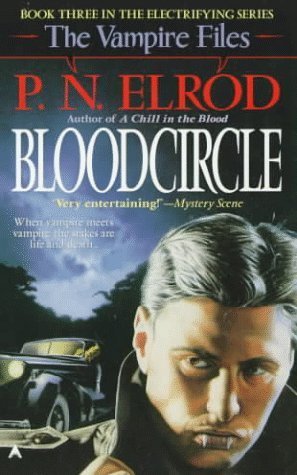
Bloodcircle, by P. N. Elrod
Shadow Ops: Fortress Frontier, by Myke Cole

This is the followup to Shadow Ops: Control Point. I'm super excited about Myke Cole's writing. He writes with a boldness and forthright manner that is refreshing. His take on magic is interesting, and the alternative history setting he creates doesn't go so far as Illona Andrews or Kim Harrison, but is more interesting than most authors trying to create a contemporary setting not radically altered from our reality. That isn't to say I don't thoroughly enjoy Andrews' and Harrison's alternate history, I do. Those author's attempting to integrate magic into something current without having it changing society as a whole, though, often fail to present the conflict in a meaningful way, or to weave said conflict into the internal struggles and emotional journeys of the characters. Myke Cole does this masterfully.
I'm particularly fond of his alternate reality, The Source. Although this makes me think of Charmed and the Source of All Evil, Cole's Source is a strange and dangerous landscape where magic is an integral part of everything. Cole's books are more action driven than drama driven, and thus his Source is written with more physical conflict than the psychological and, in many ways, darker The Black of Caitlin Kittredge's Black London Series. This certainly is representative of these two very different author's backgrounds, Cole being ex-military thus draws on that experience to enrich his narrative of the US government's attempts to regulate and control magic.
I listen to these on audiobooks, which perhaps add to the heart-pounding pace, but overall I would recommend Myke Cole's books to anyone looking for Urban or Paranormal Fantasy that veers more towards action rather than romance.
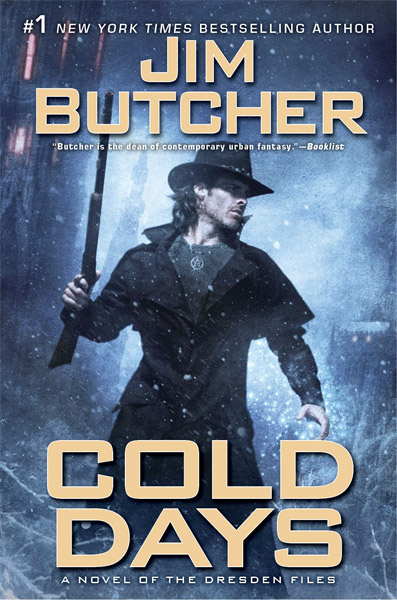
The latest installment of the Dresden Files, Cold Days came out last year and is one of the Harry Dresden books I keep listening too again and again. This book continues to reveal long-term plot-threads Butcher began weaving into the Dresden Files since Storm Front. It is also one of my favorites in the entire series, and, I would say, one of his best. Harry is almost the perfect fallen hero. He's bull-headed, which often overrides his good sense or keeps him from reaching logical conclusions he eventually gets to anyways. This is sometimes frustrating to read, though they are such an endemic part of him as a character that it is hard not to love it anyways. And it's part of why we love him. In this book Harry is the Winter Knight.
The scene with his first encounter with his brother since apparently coming back from the dead is fantastic. In it Harry lays bare his fear of being a monster, something he has struggled with, in one way or another, since the beginning. Here, however, he is what he considers a monster. In his mind he's given in to the seduction of power and traded part of himself for it. Thomas, in typical fashion, chastises him for being an arrogant prig and thinking he's the only one to experience inner demons, and there lies part of Butcher's brilliance.
This series takes me longer to get into, not because the writing is poorer quality, because that is far from the case. This series, however, is not the action driven books of Butcher or Cole, but rather closer to hard-boiled detective novels like The Maltese Falcon. P. N. Elrod does a masterful job at creating the dark and tense atmosphere of the old detective novels, and in grounding the stories in a sense of realism, despite centering on a vampire. I highly recommend them.
My list of most influential books pt. 1
The list of books that have most influenced me over the years, at least of the ones that come to mind, are as follows:
Here is the cover of the book from when I bought it, and then the newest cover:
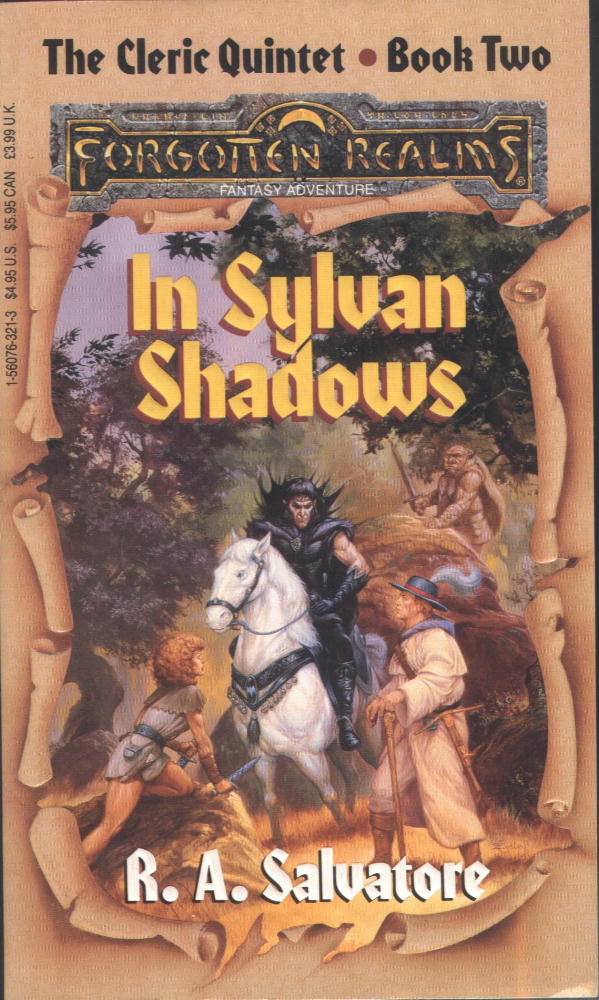
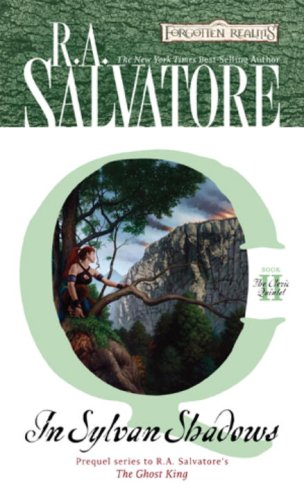


Really, the whole Cleric Quintet influenced me, but overall my favorite authors in the Forgotten Realms were, first, R. A. Salvatore, and then also Ed Greenwood. Salvatore provided characters filled with conflict about being outsiders, misunderstood, and struggling in a world that didn't accept them. Drizzt Do'Urden's stories had an edge to them that many other fantasy novels lack. The stories are full of action, and the knowledge that he, as a drow, would never be accepted anywhere was heartbreaking. There would never be a happy ending for Drizzt, and so he took solace in surrounding himself with a close family of friends and making them his world.
Cadderly, the main character of the Cleric Quintet, was my first fictional character crush. He was lovable, powerful, and searched for meaning in his world. His spirituality, and thus magic, were dependent on music, something I empathize with and which hearkens back to the Silmarillion of J. R. Tolkein. Cadderly's story is ultimately of becoming something far greater than what he started as, and struggling against sometimes overwhelming odds. Here we see Salvatore's more playful side. He is, perhaps, why I fell so deeply for Harry Dresden. There is an element of Dresden in Cadderly, perhaps his often clumsy way of dealing with the world, at least in the beginning. He, too, was abandoned and descended from darker parentage, as well as being destined for far greater things. Dresden is much darker, angrier, and in the end more tragic, but Cadderly shares similar roots.
Greenwood's novels don't have quite the same depth of character as the inherently conflicted protagonists of Salvatore, but his writing is filled with an amusement and playfulness that bely the strong action and driving narrative. We could all aspire to his level of wit and the quality of his prose. AND, lest we forget, the entire Forgotten Realms RPG and fiction setting developed from him and his campaign in Shadowdale with the Knights of Myth Drannor.

This is just an incredible story I read for English in high school. As is:

Friday, May 31, 2013
Review of Three By Moonlight on The World of Words blog!
Some really kind words about Three By Moonlight and about my in-progess novel from Susan Mary Malone, author of By The Book, at The World of Words blog.
"Sometimes (and when all is perfect), genre accomplishes exactly what Literary does—including that same depth, inherent internal conflicts as well as external ones, providing a clue into the human condition that makes it all worthwhile.
"We can all point to many examples as well. One such is J. Nelson Aviance’s Fantasy work, about vampires and werewolves and mages. His recent collection, Three by Moonlight, includes brilliant writing, compelling characters (I’d follow Eyulf the werewolf across eight galaxies), and gripping stories. And this is just a tease for his novel in progress. A young author to watch, Aviance drew me into a genre that, as all who know me can attest, is not something I’d normally pick up for pleasure and insight. But that’s exactly what I found there. And it’s smart—a key ingredient to what I love."
Wednesday, May 29, 2013
Love scenes
So, finished up going through the corrections that my editor marked in my manuscript. Took out some, restructured subplots, and added a number of scenes. My big dilemma was deciding where the line was for the love scenes. While this isn't Paranormal Romance, there is a strong romantic element, especially since much of the character development happens through the relationship between Duke and Eyulf. But even in Paranormal Romance there is a line you don't cross, in terms of the level of graphic content, unless you intend to move into erotic genres.
Where is that line? For genre fiction that ISN'T a variation on the Romance genre, that line is blurry. I wrote the love scenes as honestly as I could. I tried to infuse it with as much chemistry and sensuality that I could. I purposely did not want to give a tutorial on this or that sex practice. Further, my love scenes aren't just any love scenes, they're gay. I want as many readers as possible to identify with my characters, without the hangups of having no experience with which to relate, or any other kinds of inhibitions or hangups.
I used, 'If you have to ask if you went too far, you probably did,' as a general principle. So, how far is not too far? That depends on the writer, on the characters, on the situation, and on the genre. I'm happy with how the scenes turned out. Ultimately, the reader needs to connect with the character, needs to identify with them and what is on the page in a real-time imagineered experience. They don't necessarily need an anatomy lesson or a description of the Kama Sutra. But the writer needs to be honest. Needs to deliver the material with the glossy lens of a realized ideal. I guess.
I guess I'll see how I did when the book gets reviewed.
Where is that line? For genre fiction that ISN'T a variation on the Romance genre, that line is blurry. I wrote the love scenes as honestly as I could. I tried to infuse it with as much chemistry and sensuality that I could. I purposely did not want to give a tutorial on this or that sex practice. Further, my love scenes aren't just any love scenes, they're gay. I want as many readers as possible to identify with my characters, without the hangups of having no experience with which to relate, or any other kinds of inhibitions or hangups.
I used, 'If you have to ask if you went too far, you probably did,' as a general principle. So, how far is not too far? That depends on the writer, on the characters, on the situation, and on the genre. I'm happy with how the scenes turned out. Ultimately, the reader needs to connect with the character, needs to identify with them and what is on the page in a real-time imagineered experience. They don't necessarily need an anatomy lesson or a description of the Kama Sutra. But the writer needs to be honest. Needs to deliver the material with the glossy lens of a realized ideal. I guess.
I guess I'll see how I did when the book gets reviewed.
Tuesday, May 14, 2013
Three By Moonlight Launch!!!
Well, the day has almost arrived, my launch on Amazon.com. Truthfully, it's been available in paperback for a day or two already, but I had papers to finish up for grad school and had to get the Kindle version formatted and ready to go. I'm so excited!!!
So, a couple things, first, go to my homepage and listen to my interview on The Bear Podcast. The guys were super sweet and I think it went pretty well for being my first interview.
Second, HERE is the link to the book on Amazon.
Third, HERE is my author page on Amazon.com, so if you haven't gotten enough of me yet, you might find more there.
Here's to hoping for huge success!
Also, my editor Susan Malone is done with my first novel manuscript. It's going to be in the mail in the next few days on it's way back here. I seriously can't wait. Thankfully I have a lot of work for school to finish up to distract me! Details on that will be forthcoming, very forth- in the coming. I will probably start posting about that come July-ish.

So, a couple things, first, go to my homepage and listen to my interview on The Bear Podcast. The guys were super sweet and I think it went pretty well for being my first interview.
Second, HERE is the link to the book on Amazon.
Third, HERE is my author page on Amazon.com, so if you haven't gotten enough of me yet, you might find more there.
Here's to hoping for huge success!
Also, my editor Susan Malone is done with my first novel manuscript. It's going to be in the mail in the next few days on it's way back here. I seriously can't wait. Thankfully I have a lot of work for school to finish up to distract me! Details on that will be forthcoming, very forth- in the coming. I will probably start posting about that come July-ish.

Thursday, May 2, 2013
First Interview Coming Up
I'll announce it officially when it's done, but I've got my first-ever interview for the upcoming Three By Moonlight early next week and I can't even say how excited I am! It'll be for a podcast, the owners of which loved the stories. It's so gratifying to have someone I'm not related to and who isn't my editor love my work!!!
Monday, April 29, 2013
Three By Moonlight out on May 15th
Three By Moonlight: A collection of werewolf tales will be launched on Amazon.com on May 15th in both Kindle format ($2.99) and paperback ($5.99).
www.jnelsonaviance.com
Right now just trying to continue to build my "platform", the ubiquitous object of necessity for authors, self-published authors in particular, to build before publication. The rule I keep seeing can be summed up as "Platform before publication, PR after". I have a few bites from blogs to review the book, and a podcast or two, and hope to expand that as I connect with a few friends with connections. Still, anxious to see how far I can expand my reach.
In the meantime, just plugging away at perfecting the press release, search for blogs that will review self-published books, and hope that the people who have already showed willingness to review will like it enough to come through.
Anyone interested in doing a review or interview send me an email at jnelsonaviance@gmail.com and I can send you a review copy (either digital or hard copy), or set up a time to do an interview.
Saturday, April 20, 2013
Learning the Nuts and Bolts of Self-Publishing
I've spent the last day and a half, on and off, figuring out how to format my manuscript to match the specifications required for CreateSpace, which basically is all about the margins needing to be a certain size to be able to construct the actual book, and a few other things. I still need to adjust the cover, and since it takes up to 24 hours to review the files, every time I've made a change it's prolonged this process.
Still...I'm unbothered on the whole because I've still yet to finish my press release, still yet to have a conference call with Mother Juan Aviance and another member of the House of Aviance who will be reviewing the book and giving me a blurb, and then discuss the media outlets I might be able to use to publicize the book.
I had a little back and forth with @YasmineGalenorn, who is lovely, which was precipitated by her Tweeting a nearly audible sigh after 13 hours of doing admin and press stuff. Even for a major author with a big-press career there are nuts and bolts, though her's don't necessarily involve the margins.
Was reading Nathan Bransford's blog and this was one of the things that turned him off to self-publishing. Aside from the cachet of being published by one of the Penguin Group imprints, it's a big benefit to have them handle all the nuts and bolts, and, possibly, marketing. Certainly getting published by a Penguin imprint has a big benefit in access to bookstores as well as making it more likely that you'll get reviews and press. When I'm finished with rewrites to my novel, I'll shop it around to the big press places, but in the meantime, Three By Moonlight will be my first foray into self-publishing. It's giving me experience, if nothing else.
Saturday, April 13, 2013
Soon to Come On Kindle...
Soooooo busy right now, but distracting myself from the stress of 2 graduate seminars, teaching 2 classes, and starring in the opera by reading all i can find on Kindle publishing and promoting. Hope it pays off, it's a big leap. That said, Three By Moonlight will come out soon, I'm still working on getting the marketing pieces in order, but I'm shooting for May 15th.
Also, the website is now live. www.jnelsonaviance.com
Subscribe to:
Comments (Atom)